Nine of Swords Tarot Card Meaning
The Nine of Swords shows a person sitting up in bed, face buried in hands, with nine swords mounted on the wall above. The core tension is psychological suffering: worry, nightmares, guilt, or fear that takes over the mind in the quiet of night, even when outer circumstances are not as dire as they feel. It differs from the Three of Swords, which depicts a specific piercing sorrow, and from the Ten of Swords, which suggests a definitive ending. Here the anguish is ongoing, and thought itself becomes the instrument of torment.
UPRIGHT
Anxiety and dread loom large at night, yet the suffering is often mental rather than factual.
REVERSED
May signal emerging from deep worry, or suppressing fear further, or chronic self-doubt.
Imagery & symbolism
The imagery described here follows the Rider–Waite–Smith deck.
- Figure covering face
- The person hides their face in their hands, a posture of grief and helplessness, suggesting being overwhelmed by emotion and unable to face the outside world. It is not weakness but a sign that inner load has reached a breaking point, and it points to suffering that is largely subjective.
- Nine swords on the wall
- Nine swords hang in a row above the bed like a pressing array of thoughts, symbolizing layered, repetitive worry. The swords do not pierce the body, indicating that the harm comes more from anticipation and self-talk than from an actual blow already struck.
- Bed and dark background
- The scene is set on a bed, usually associated with rest and privacy, yet it becomes a place of torment, suggesting that anxiety intensifies at night or in solitude. The dark background reinforces isolation and points to fears difficult to voice to others.
UPRIGHT
The Nine of Swords upright often appears during times of worry, insomnia, or rumination. A person may lie awake over an unresolved issue, guilt, or fear of the future, replaying worst-case scenarios. The card does not predict disaster; it indicates that the mind is under high pressure and that the intensity of feeling does not equal the severity of external fact. Its opportunity lies in recognizing that the pain is largely mental, which may prompt seeking support, rest, or professional help and thereby interrupt the cycle. Its limit is that, if borne alone, anxiety reinforces itself until no way out seems possible. It asks for distinguishing real threat from imagined amplification and for accepting that needing help is not failure.
REVERSED
The Nine of Swords reversed has several possibilities. First, the person may be gradually emerging from the pit of anxiety, beginning to sleep and reason again as fear loses intensity. Second, it may mean pushing the pain deeper, appearing calm while avoiding the issue, so anxiety resurfaces in other forms. Third, long-standing self-doubt or guilt may have hardened into habitual thinking, making it hard to trust one's own judgment. Reversed is not automatically improvement or decline; it invites checking whether one is truly healing or merely hiding the problem. If accompanied by ongoing avoidance, a more active facing of the root may be needed.
Meanings by question
Love & relationships
UPRIGHT
A relationship may be filled with worry and overthinking, such as fear of abandonment, repeatedly reading into a partner's words, or anxiety over conflicts that have not happened. Communication and reassurance are key to relief.
REVERSED
Reversed may indicate relationship anxiety easing and honest talk beginning; it may also mean one person suppresses unease, appearing calm while resentment builds.
Career & work
UPRIGHT
Work stress may show as fear of mistakes, overconcern with evaluation, or sleeplessness before deadlines. Actual ability may not be lacking, but anxiety drains energy.
REVERSED
Reversed may show career anxiety easing and rhythm returning; it may also represent pushing down job dissatisfaction, leading to burnout or avoidance of decisions.
Money & practical matters
UPRIGHT
Financial matters may bring repetitive worry about bills, debt, or the future, even affecting sleep. Fear may exceed the actual shortfall, but a rational check is needed.
REVERSED
Reversed may mean financial anxiety lightening and beginning to face reality; it may also indicate avoiding looking at accounts and letting money stress become chronic unease.
Common misconceptions
Does the Nine of Swords mean something terrible is about to happen?
Not so. The card mainly describes psychological fear and worry, not a prediction of external disaster. It points to intense feeling while facts may be less dire than imagined, so the focus is on handling inner pressure.
Does reversed always mean improvement?
No. Reversed may mean anxiety is lessening, but it may also mean fear is suppressed deeper or self-doubt has become chronic. Context is needed to tell release from avoidance.
Related cards & differences
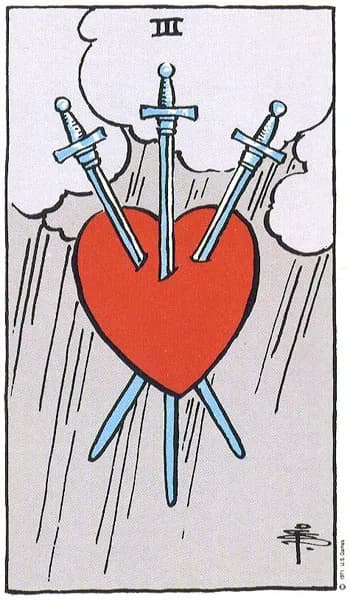
Three of Swords
The Three of Swords depicts sorrow from a specific event such as separation or betrayal; the Nine of Swords is ongoing mental worry that may lack a concrete external cause.
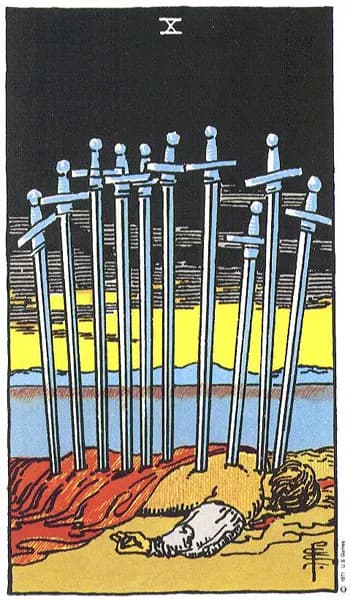
Ten of Swords
The Ten of Swords symbolizes a definitive ending and rock bottom, often closing a phase; the Nine of Swords remains within the process of torment, not yet at the end.
Read the card in your own context
A card’s general meaning is a starting point. Your question and its position in the spread help explain what it contributes to your reading.