
Six of Swords Tarot Card Meaning
The Six of Swords holds a tension between moving forward and still carrying what was left behind. The scene is not a triumph but a quiet ferry crossing. It differs from the Five of Swords' open conflict and the Seven's stealth: here the point is to leave the troubled shore and reach calmer water slowly and deliberately.
UPRIGHT
Leaving turbulence for calmer waters, carrying unresolved pain forward.
REVERSED
The passage stalls or is avoided; old matters pull you back, or leaving becomes escape.
Imagery & symbolism
The imagery described here follows the Rider–Waite–Smith deck.
- Ferryman and punt
- A figure poles a small boat across the water with passengers aboard. This suggests the crossing is guided and supported rather than a solitary struggle, and that transition needs a workable method or helper.
- Contrasting water beside the boat
- Water beside the boat is disturbed in one area and calmer in another. The contrast can evoke movement from difficulty toward greater steadiness, without suggesting that old burdens have disappeared. A transition can still need time and support.
- Cloaked passengers and upright swords
- Passengers sit huddled in cloaks while swords stand fixed in the boat. This suggests old grief, judgments, or disputes travel along; leaving does not erase them, it relocates the burden.
UPRIGHT
Upright, the Six of Swords often marks a necessary transition away from conflict, anxiety, or confusion toward a steadier state. It can appear as a move, a change of environment, the end of a draining relationship, leaving an exhausting job, or simply deciding not to keep re-entering an old argument. The opportunity lies in the relief that movement itself brings; the smooth water suggests the process may be quiet rather than dramatic. The limit is equally clear: the swords remain in the boat, so old thoughts, wounds, or unfinished conversations travel with you. This card does not promise that difficulties vanish, only that you are leaving the roughest water. Treating the crossing as a full resolution often means meeting similar lessons on the new shore.
REVERSED
Reversed, the Six of Swords can take several forms. The passage may be blocked: you want to leave but cannot, or circumstances keep delaying the journey, leaving you stranded between shores. It can also indicate overstaying: the water is already calm, yet you keep looking back and treating old pain as part of your identity. Another reading is escape rather than transition, where changing places or partners substitutes for addressing the real issue, so similar difficulties recur. It may also describe an inner move, where the body stays but the mind begins to reconcile with the past. Reversed asks you to discern whether the obstacle is external or your own reluctance to let go.
Meanings by question
Love & relationships
UPRIGHT
A relationship may enter a calmer transitional phase, such as moving from arguments toward quieter communication, or agreeing to step back and sort things out. It can also mean leaving a draining relationship with sadness but a clear direction.
REVERSED
Reversed may show wanting to leave yet repeatedly returning, or a bond stuck between repair and ending. It can also point to using a move or breakup as avoidance rather than facing the core communication problem.
Career & work
UPRIGHT
At work this often points to changing environments: a transfer, a new team, or leaving a high-pressure project for a slower rhythm. It may also describe a low-key interim period where you stabilize before pursuing growth.
REVERSED
Reversed can mean wanting out but being unable to leave, with a resignation or transfer delayed. It may also show carrying old workplace resentment and habits into a new role, making adaptation difficult.
Money & practical matters
UPRIGHT
Financially this leans toward leaving high-risk or high-pressure situations for steadier arrangements, such as reducing debt, lowering expenses, or moving funds to a calmer position. The process is slow but directional.
REVERSED
Reversed may indicate failing to cut losses when needed, or being held back by old debts and promises. It can also describe repeatedly changing plans without addressing the underlying income and spending structure.
Common misconceptions
Does the Six of Swords mean the problem is fully solved and smooth sailing follows?
No. The swords remain in the boat, so old pain and judgments travel along. It shows leaving the roughest water, not the end of every lesson. Mistaking the crossing for a finish line often brings similar difficulties to the new shore.
Does reversal always mean the journey failed or the relationship is over?
Not necessarily. Reversed can describe an external delay, an inner shift not yet visible outwardly, or a warning against escape disguised as moving on. It describes the state of transition, not a fixed outcome.
Related cards & differences
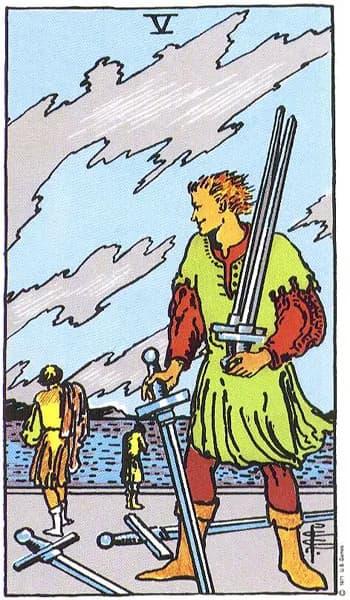
Five of Swords
The Five of Swords centers on conflict and its costs while still on shore; the Six begins the crossing away from that battlefield.
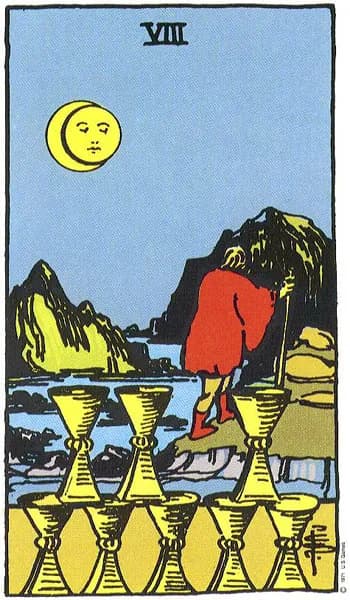
Eight of Cups
The Eight of Cups is a deliberate turning away from emotional fulfillment; the Six of Swords emphasizes being carried across water while thoughts and judgments come along.
Read the card in your own context
A card’s general meaning is a starting point. Your question and its position in the spread help explain what it contributes to your reading.