
Five of Swords Tarot Card Meaning
The Five of Swords shows the aftermath of a conflict: one figure gathers several swords while two others walk away dejected, their blades left on the ground. Unlike the Three of Swords, which centers on heartbreak, or the Ten, which marks an absolute end, this card focuses on the cost and attitude that follow a decided contest. Its core tension is whether winning an argument or competition is worth the loss of trust, respect and future cooperation. The shape of the victory tends to shape the aftermath.
UPRIGHT
Winning a conflict through force or sharpness, yet the victory carries loss and damaged trust.
REVERSED
Conflict may be suppressed, delayed or turned inward, or it may mark a choice to stop fighting and begin repair.
Imagery & symbolism
The imagery described here follows the Rider–Waite–Smith deck.
- The figure holding three swords
- One person carries two swords on his shoulder and holds a third point-down, showing control of most weapons on the field. This suggests an upper hand, command of the narrative or resources, yet the grip also hints that the win rests on dominance rather than agreement.
- The two retreating figures
- Two people walk away with lowered heads and dejected posture. This presents the losers' withdrawal and injury, and suggests that a relationship or collaboration has broken. Their leaving is not reconciliation but a temporary exit from the field, with resentment possibly remaining.
- The two swords on the ground
- Two swords lie discarded, unclaimed. They symbolize positions set aside, disputes left unresolved or claims abandoned; the blades remain present, indicating the issue has not truly vanished, only that no one currently holds it.
UPRIGHT
Upright, the Five of Swords often points to a conflict that has already been decided: you may have gained the upper hand in a debate, competition or power struggle, but at the cost of another's retreat, a cooling relationship or a bruised reputation. It does not necessarily mean you are wrong; it asks you to notice how the victory was won and what follows. If you are the winner, consider whether total victory is necessary and whether you can bear the other side's distance and non-cooperation. If you are on the losing side, you may face defeat, suppression or forced concession; pressing harder may not help, while preserving strength and reassessing your position is more practical. The card also applies inwardly: letting harsh self-criticism override your own needs is a kind of exhausting victory. Overall it describes conditional success—an advantage exists, but the cost and aftermath need handling.
REVERSED
Reversed, the Five of Swords can turn its conflict energy in different directions. One possibility is that fighting is suppressed or postponed: the surface looks calm, but resentment lingers and the problem moves into the shadows, likely to resurface another way. Another possibility is that you begin to see that continuing to win is not worth it, and you are willing to step back or withdraw from a pointless contest, which can become a starting point for repair or damage control. It may also show that you are at a disadvantage but reluctant to admit it, repeatedly re-engaging a situation that cannot be won. Reversed does not automatically mean reconciliation; it more often indicates that the conflict has changed form—from open confrontation to avoidance, internal friction or a slow exit. The key is to tell whether you have truly let go or merely hidden the swords.
Meanings by question
Love & relationships
UPRIGHT
Arguments, cold wars or one partner overriding the other may appear. Winning the exchange does not win closeness; watch for verbal wounds and withdrawal.
REVERSED
Conflict may be avoided or bottled up, with surface calm but unresolved hurt; it can also be a turning point where both sides begin to yield and stop hurting each other.
Career & work
UPRIGHT
You may gain the upper hand in workplace competition or team disagreement, but consider whether your methods damage trust and future collaboration, possibly leaving you isolated.
REVERSED
Office politics may go underground, or you may choose to exit a pointless fight; it can also suggest old tensions need direct handling rather than continued avoidance.
Money & practical matters
UPRIGHT
In financial negotiation or disputes you may secure favorable terms, but weigh the relational cost and whether future cooperation suffers; avoid making enemies over small gains.
REVERSED
You may give up rightful claims to avoid conflict, or old accounts and disputes may be shelved; it can also signal ending a pride-driven fight and turning to practical negotiation.
Common misconceptions
Does the Five of Swords represent total victory and success?
It does depict someone gaining the upper hand, but the emphasis falls on the cost and attitude of winning rather than simple achievement. Unlike the Six's transition or the Ten's ending, this card stays at the moment when victory is just decided and the aftermath is unsettled, warning that success may come with relational loss.
Does reversal always mean reconciliation or defeat?
Reversed can point to letting go of a fight, but it may also mean conflict is suppressed, turned inward or left unresolved. It guarantees neither reconciliation nor defeat; read it with the specific situation to judge whether there is genuine release or only temporary avoidance.
Related cards & differences
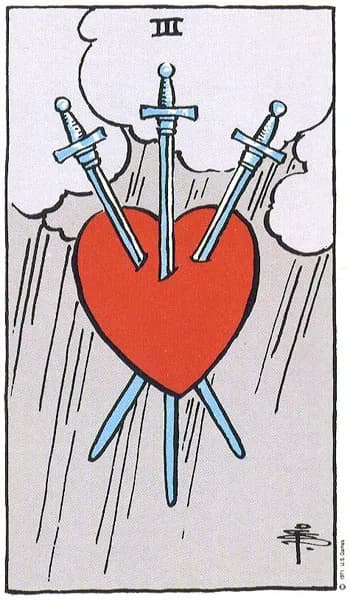
Three of Swords
The Three of Swords centers on heartbreak and pain itself, while the Five depicts the cost and contempt after a conflict is decided—one is the wound, the other the aftermath of fighting.
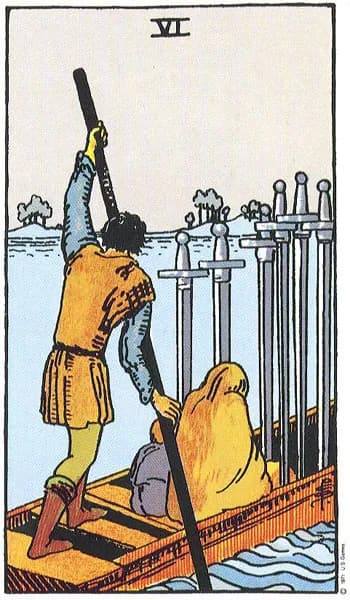
Six of Swords
The Six of Swords symbolizes leaving strife and moving toward calm, while the Five remains at the scene of conflict; the former is departure and healing, the latter the moment victory is won and relationships are damaged.
Read the card in your own context
A card’s general meaning is a starting point. Your question and its position in the spread help explain what it contributes to your reading.