Two of Swords Tarot Card Meaning
The Two of Swords centers on the tension of holding a precarious balance through calm and restraint. The blindfolded figure with crossed swords suggests she is not unaware of conflict but chooses not to look, using reason as a shield. Unlike the Ace of Swords, which cuts through confusion with sharp clarity, the Two emphasizes suspended judgment and withheld action. It can be a prudent pause or a form of procrastination and self-closure, depending on whether the balance is a deliberate choice or an avoidance.
UPRIGHT
Maintaining a tense balance through reason, postponing conflict and choice while holding opposing forces in check.
REVERSED
The balance breaks down, bringing confusion, self-deception, or a forced reckoning with long-avoided issues.
Imagery & symbolism
The imagery described here follows the Rider–Waite–Smith deck.
- Blindfolded figure
- The figure's eyes are bound with cloth, suggesting a deliberate or imposed refusal to see the situation clearly. The blindfold can mean temporarily blocking out distractions to keep inner order, or avoiding the truth in exchange for surface calm.
- Crossed swords
- Two swords cross over the chest in a closed, defensive posture. Swords suggest thought and judgment, while their crossing implies two positions counterbalancing each other. It can indicate rational weighing, but also a mental deadlock where neither side prevails.
- Water and stone seat behind
- Behind the figure lies rippling water, while she sits on a hard stone seat. Water is often associated with emotion and the unconscious, stone with firm立场. Together they suggest reason pressing down on emotional currents, a calm surface that still requires effort to maintain.
UPRIGHT
Upright, the Two of Swords often appears when a pause in judgment is needed and hasty statements should be avoided. It suggests the person recognizes opposing forces and chooses to hold them in balance through calm and restraint. This state has value: when emotions run high or information is incomplete, postponing a decision can prevent escalation and buy time for reflection. It also represents conscious self-restraint, using reason to check impulse rather than taking sides. Yet this balance is fragile and consumes energy. If surface peace is maintained without addressing underlying differences, the stalemate hardens and avoided issues resurface elsewhere. Upright points to a conditional pause, not a true resolution.
REVERSED
Reversed, the Two of Swords can indicate that the balance has broken and long-avoided choices are pressing in. One possibility is information overload or wavering立场, making the old restraint unsustainable and forcing a confrontation with what was previously unseen. Another is a loosening of the deadlock, where the person finally removes the blindfold, acknowledges the conflict, and begins to address it. It can also point to self-deception and opacity, where表面 harmony hides real disagreement. Reversal is not necessarily negative; it often marks the end of stagnation, though the process may bring discomfort and require reassessing what is truly worth preserving.
Meanings by question
Love & relationships
UPRIGHT
Unspoken differences may exist, with both parties maintaining surface harmony through politeness and restraint, avoiding direct conflict. This can give space to cool down, but may also leave real needs unaddressed for too long.
REVERSED
Long-avoided issues may surface, making surface calm hard to sustain. It can also mean one or both parties are finally willing to communicate honestly and break the deadlock, though the process involves facing discomfort and disagreement.
Career & work
UPRIGHT
At work, one may be caught between two options or factions, choosing not to take a side and maintaining a neutral stance. This can avoid the risk of alignment, but may also be seen as indecisive and cause missed timing.
REVERSED
A workplace deadlock may break, forcing a delayed decision. There may also be confusion, shifting positions, or poor communication, requiring a clearer grasp of facts rather than continued surface balance.
Money & practical matters
UPRIGHT
Financially, it is a time to postpone major decisions, gather information, and compare options rather than acting under pressure. Keeping income and expenses balanced is the focus, but the pause should not become a long-term strategy.
REVERSED
Procrastination or insufficient information may lead to poor financial judgment, or one may finally have to face previously avoided accounts or disagreements. This calls for seeing real numbers rather than relying on vague optimism.
Common misconceptions
Does the Two of Swords mean the problem is solved and both sides have reconciled?
It more often indicates that conflict is suspended, not truly resolved. The balance in the image requires constant effort, and the blindfold suggests the person does not see the whole picture. Reconciliation requires communication and facing issues, while this card is closer to a truce and avoidance.
Does a reversed Two of Swords always mean a relationship or situation is completely broken?
Reversal can mean the balance is broken, but breaking is not the same as destruction. It may also mean the person is finally willing to remove the blindfold and face what was avoided. The outcome depends on whether they choose to address the disagreement, not on a fixed destiny.
Related cards & differences
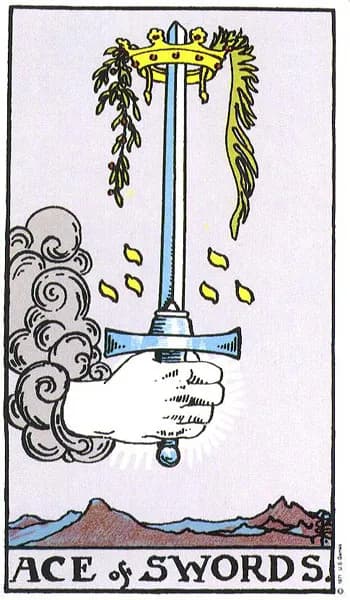
Ace of Swords
The Ace of Swords cuts through confusion with sharp judgment and decisive action; the Two crosses and lowers the swords, holding balance through restraint—one cuts, the other suspends.
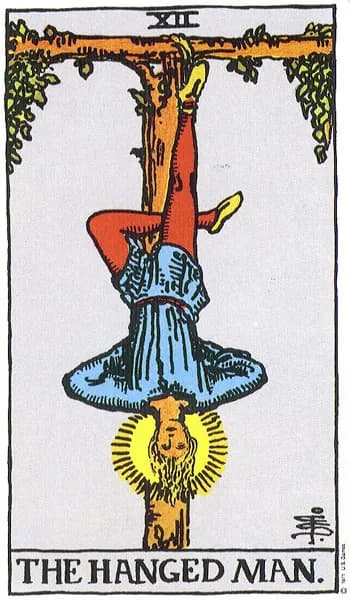
The Hanged Man
The Hanged Man is a voluntary suspension and shift of perspective, carrying surrender and waiting; the Two's pause is more defensive and avoidant, using reason to suppress conflict rather than transform viewpoint.
Read the card in your own context
A card’s general meaning is a starting point. Your question and its position in the spread help explain what it contributes to your reading.