
The Hermit Tarot Card Meaning
The Hermit's core tension is that solitude can be both a path to insight and a trap of isolation. It differs from other Major Arcana cards by emphasizing introspection and accumulated experience, transforming personal understanding into a light that can guide others.
UPRIGHT
The Hermit raises a lantern, symbolizing insight gained through solitude and experience, shared as guidance.
REVERSED
Reversed may indicate excessive isolation, refusal of help, or avoidance of introspection, or wisdom turned inward.
Imagery & symbolism
The imagery described here follows the Rider–Waite–Smith deck.
- Raised lantern
- The Hermit holds up a lantern containing a star. This suggests that inner light or truth is not hidden but can serve as visible guidance.
- Standing on a height
- The Hermit stands on an eminence or peak, indicating he has reached a perspective through solitude and reflection that surpasses the ordinary.
- Grey cloak and staff
- He wears a grey mantle and holds a staff. Grey suggests humility and neutrality, while the staff symbolizes support for an ongoing journey of exploration.
UPRIGHT
The upright Hermit suggests a period suited to introspection, solitude, or deep study. You may need to withdraw temporarily from external noise to clarify your direction. This is not avoidance but a way to gain clearer perspective. Your existing experience or knowledge may become a reference for others, but only if you are willing to share it. This card does not guarantee that solitude brings wisdom, nor that others will accept your guidance. It only indicates that when you honestly face your inner world and turn what you find into a gentle light, you may illuminate both yourself and others.
REVERSED
Reversed, the Hermit can indicate several possibilities: excessive isolation, using solitude as an excuse to avoid relationships and responsibilities; refusal to introspect, covering up issues with busyness or socializing; or imposing personal experience on others and treating wisdom as superiority. It may also mean you are ready to end solitude and rejoin the world. The specific meaning depends on whether you are currently too closed off or too outwardly focused.
Meanings by question
Love & relationships
UPRIGHT
In relationships, upright Hermit may suggest a need for space or reflection on the relationship's direction. Singles may be in a phase of self-discovery, not rushing into a relationship.
REVERSED
Reversed may indicate one partner is overly closed off, refusing communication, or the relationship is drifting due to lack of interaction. It may also suggest stopping over-analysis and returning to practical engagement.
Career & work
UPRIGHT
Upright Hermit suits independent work, research, writing, or fields requiring focus. You may become a mentor, but be careful to share rather than preach.
REVERSED
Reversed may indicate disconnection from the team or being so absorbed that you miss collaborative opportunities. It may also suggest refusing others' advice and stubbornly sticking to your own views.
Money & practical matters
UPRIGHT
Upright Hermit advises a cautious, independent approach to finances, favoring saving and researching long-term plans rather than chasing short-term trends.
REVERSED
Reversed may indicate that excessive frugality affects quality of life, or that you bear financial pressure alone because you won't ask for help. It may also suggest re-evaluating the risks of isolated decision-making.
Common misconceptions
Does the Hermit represent complete isolation from the world?
Not necessarily. The Hermit raises a lantern on a height, suggesting his solitude is for gaining shareable insight. Isolation is a process, not the goal.
Does the Hermit always represent a wise elder?
No. This card emphasizes the process of introspection and accumulated experience, not a fixed age or identity. A young person may be in a Hermit phase, and an older person may avoid introspection.
Related cards & differences
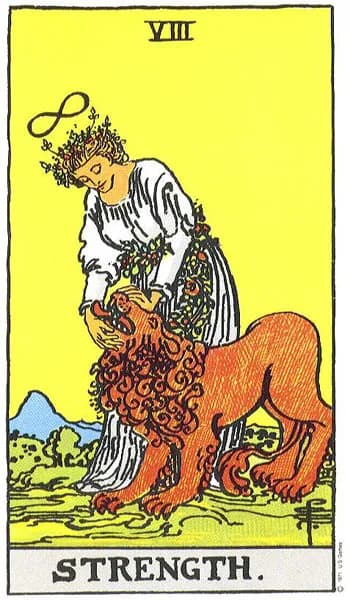
Strength
Strength emphasizes gently facing inner impulses, while the Hermit emphasizes gaining insight through solitude and introspection; both involve inner work but differ in approach.
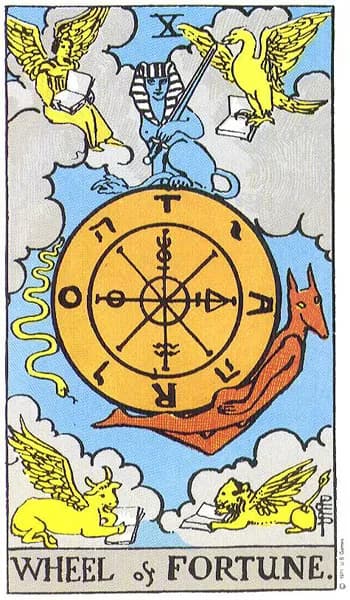
Wheel of Fortune
Wheel of Fortune symbolizes external turning points and cycles, while the Hermit emphasizes active introspection and independent exploration; the former is passive, the latter active.
Read the card in your own context
A card’s general meaning is a starting point. Your question and its position in the spread help explain what it contributes to your reading.